The Coolest Suitcase We’ve Seen In Years (And The Last One You’ll Ever Need)
Luggage is rarely something you think about until it lets you down. A wheel jams halfway through a terminal. A handle starts to wobble after a few trips. The shell picks up scuffs that don’t look like character, just wear. Most suitcases are built to do a job, not to be enjoyed.
Every now and again, though, something cuts through. A piece that makes you reassess what good actually looks like. Not louder, not trend-driven, just better.
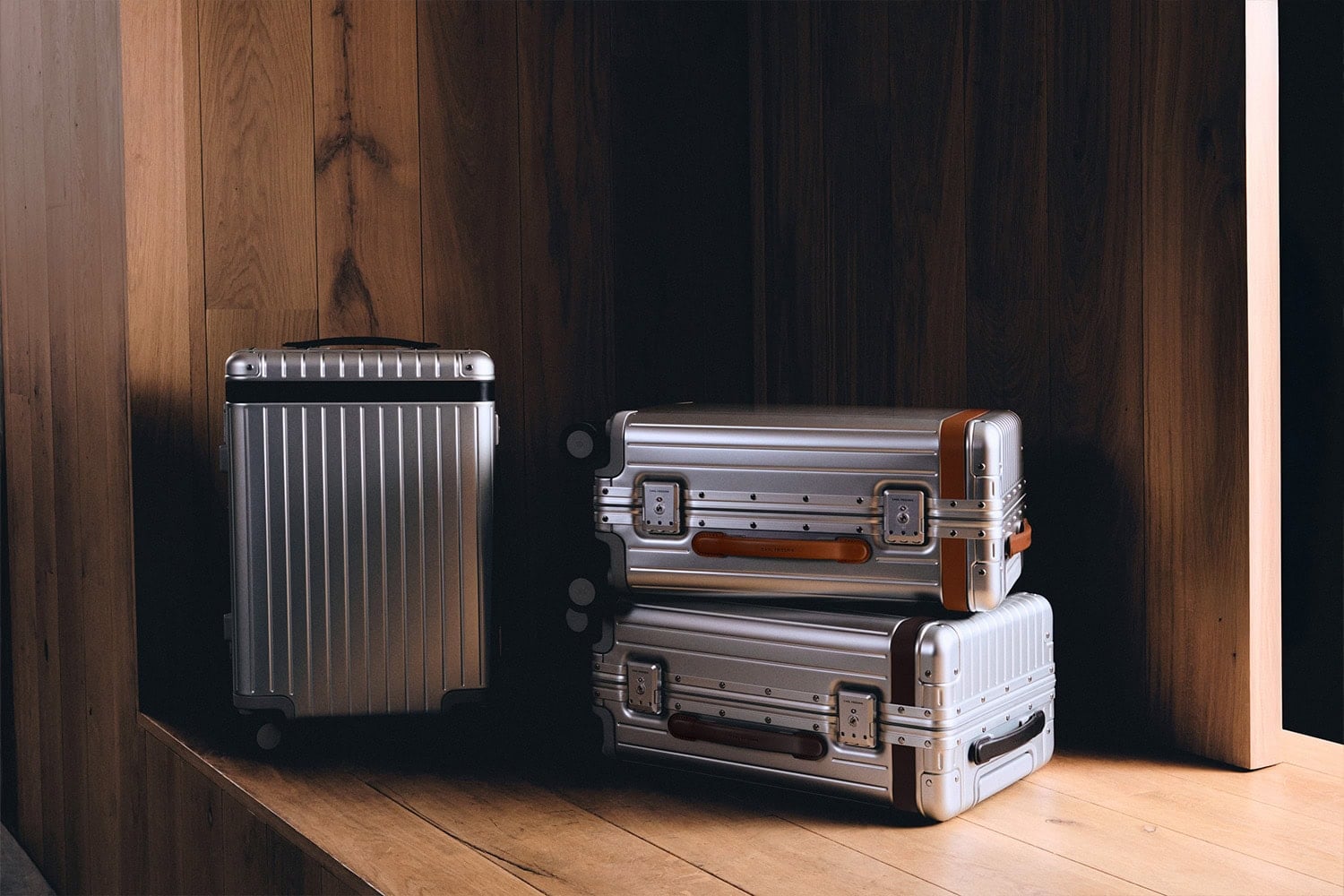
That’s exactly what Carl Friedrik has managed with its new aluminium carry-on. It’s one of those rare objects that feels considered from every angle, the kind of thing that makes you want to travel just to use it.
Which says a lot about the state of luggage. Most of it is built to hit a price point, not to last.
The result is familiar. Wheels that behave for a few trips, then don’t. Handles with just enough flex to feel unreliable. Shells that promise durability but quickly look worn in all the wrong ways. Interiors that work in theory, not in practice.
For something that’s constantly on the move, it’s a category that’s quietly become disposable. But that’s starting to shift. As with clothing and footwear, there’s a move towards buying fewer, better pieces. Trips are shorter, more frequent, and the carry-on has become the one bag that matters.
Use something often enough, and the details start to matter. At that point, it’s not about having options. It’s about having one that works, every time.
Why Aluminium Still Wins
Materials are at the heart of that shift, and aluminium sits in a category of its own.
There’s a reason it’s been used in aviation and engineering for decades. It doesn’t crack under pressure in the way plastics can. It holds its structure. And crucially, it wears in rather than wearing out. Marks and scuffs become part of the story, not a sign that it’s ready to be replaced.
Done properly, it’s the closest thing luggage has to a lifetime material.
-
- Carl Friedrik
But material alone isn’t enough. It’s how it’s put together that really counts. Where most suitcases fall apart is in the details you only notice when you’re in a hurry.
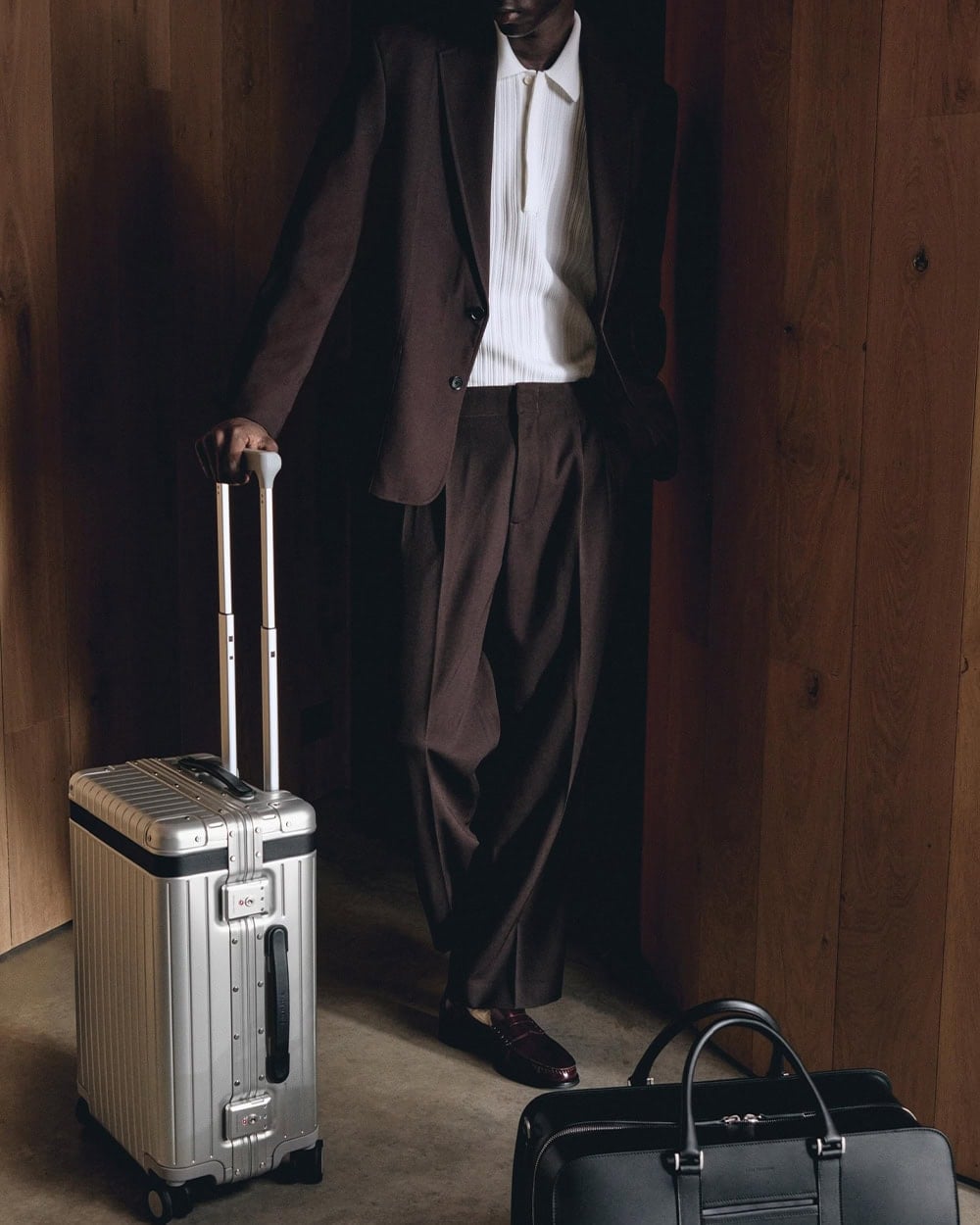
Good wheels make a bigger difference than most people realise. The kind that glide quietly, track smoothly and don’t fight you on tight turns. A solid trolley system should feel stable at every height, not like it might give way under pressure. Locks should be integrated and reassuring, not something you second-guess every time you check in.
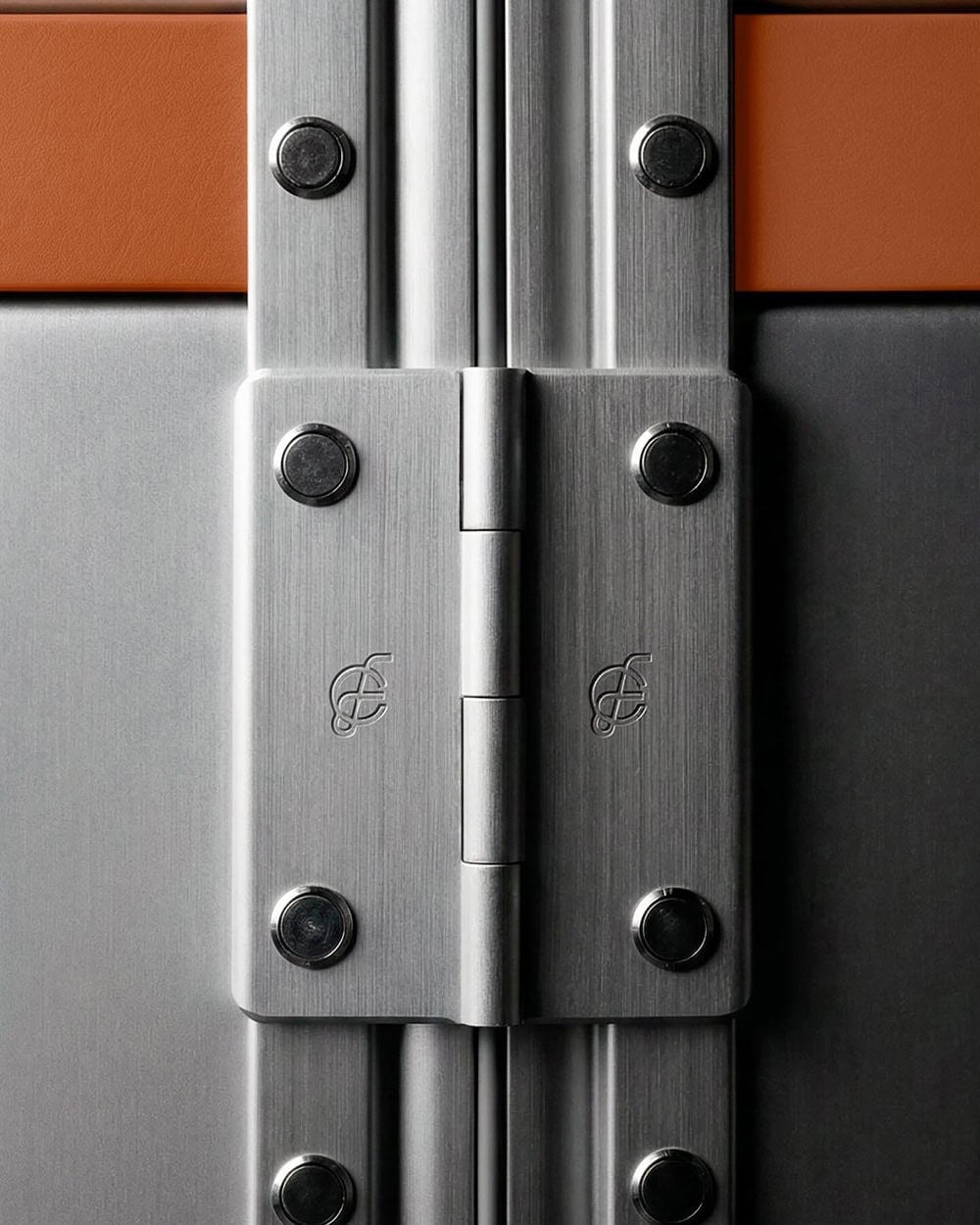
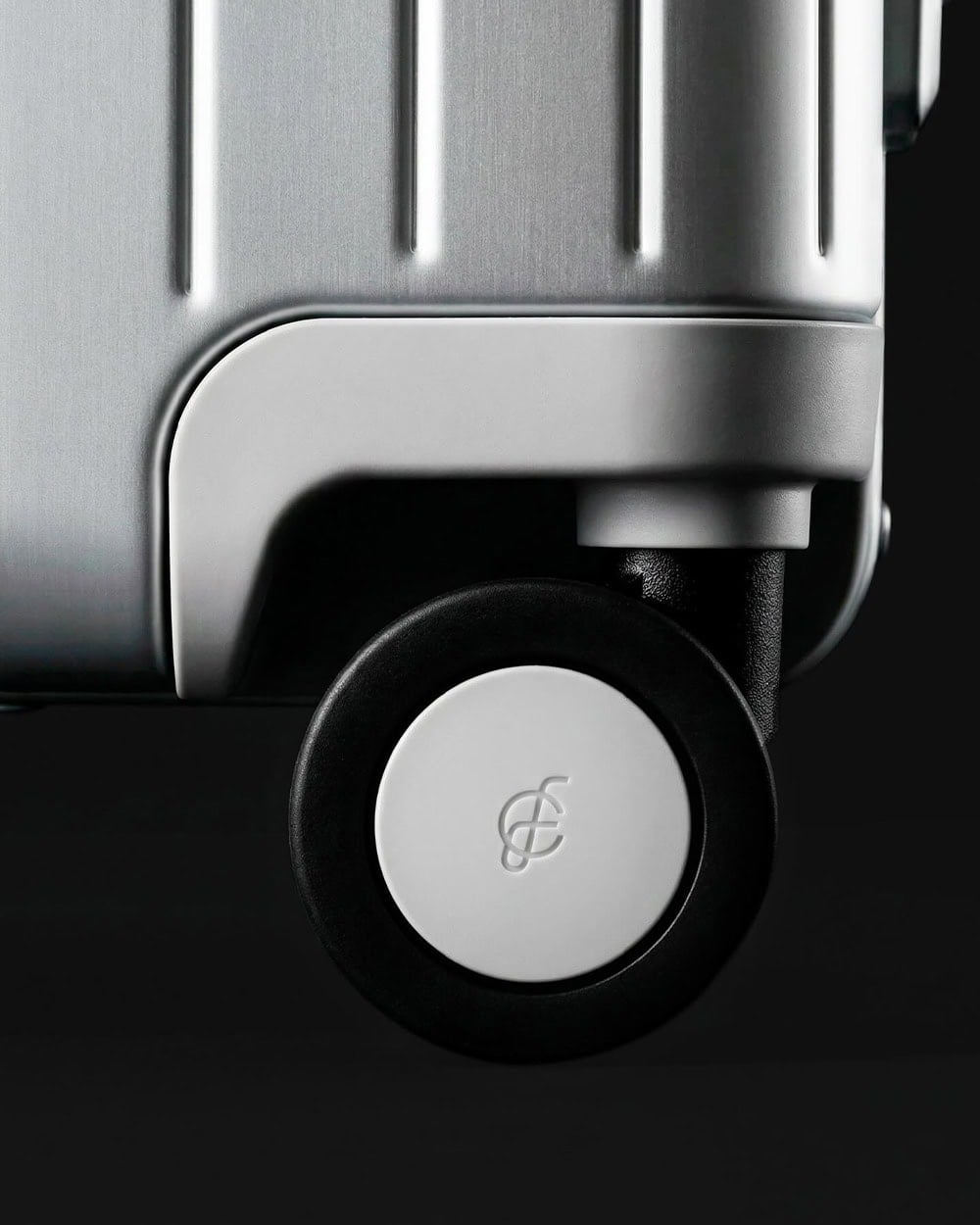
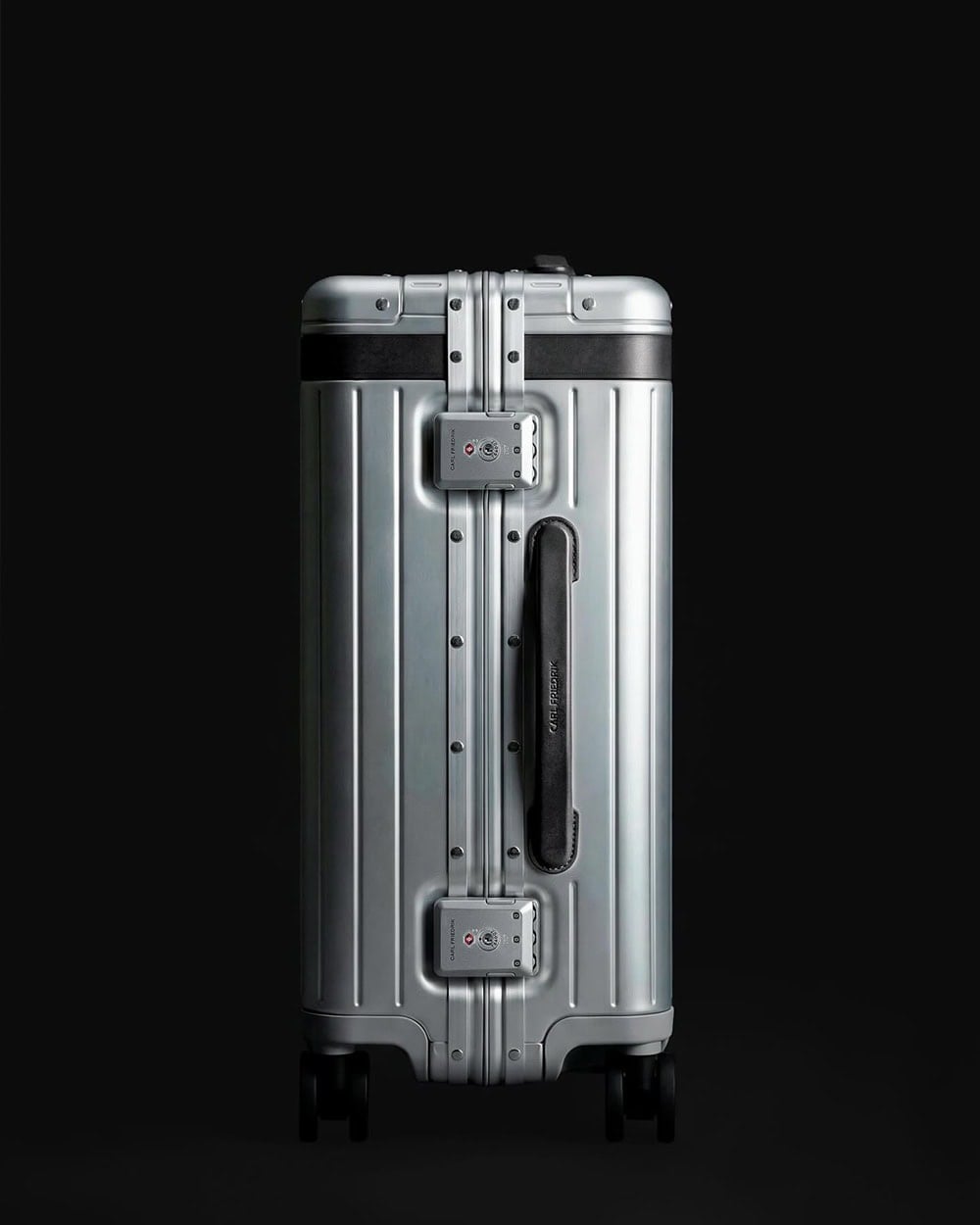
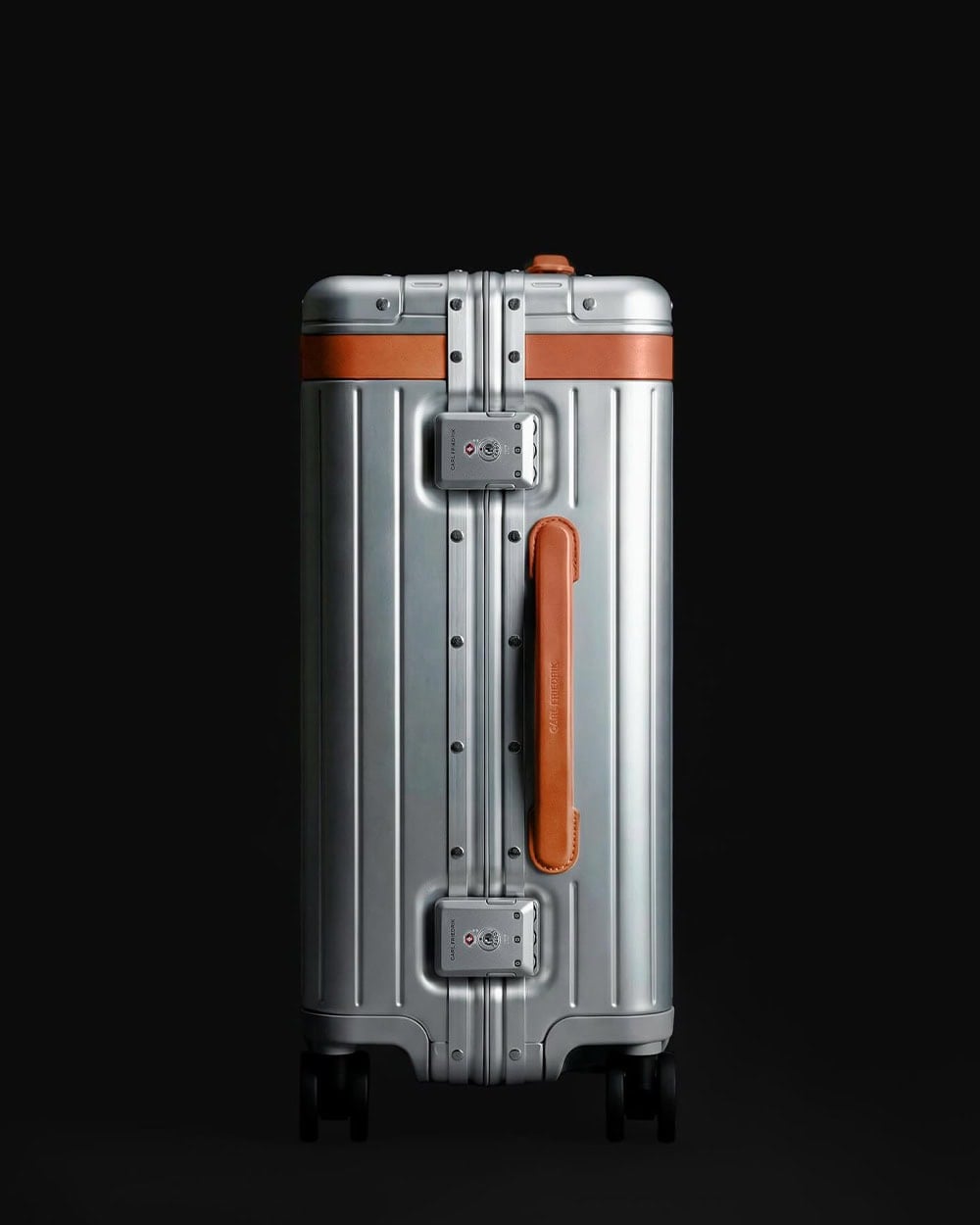
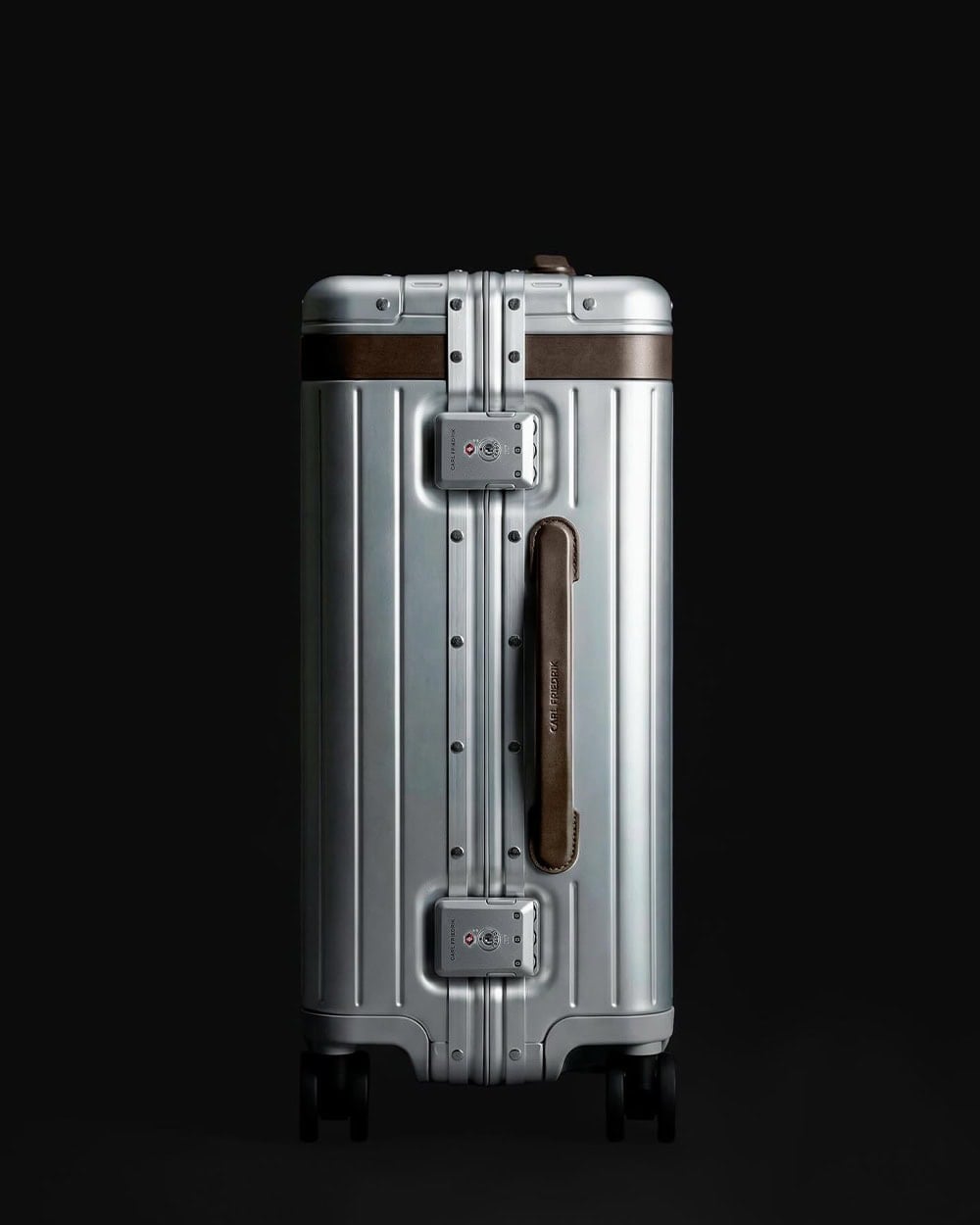
This is where Carl Friedrik’s aluminium case starts to separate itself. The wheels, developed with Japanese specialists Hinomoto, are among the smoothest you’ll come across. Steel-reinforced corners and hinges add genuine impact resistance.
Inside, the layout is practical rather than overdesigned, with a dual-compartment system that keeps everything in place without wasting space.
It’s not about adding more features. It’s about getting the important ones right.
Then there’s the design, which is what makes this feel different from the moment you see it.
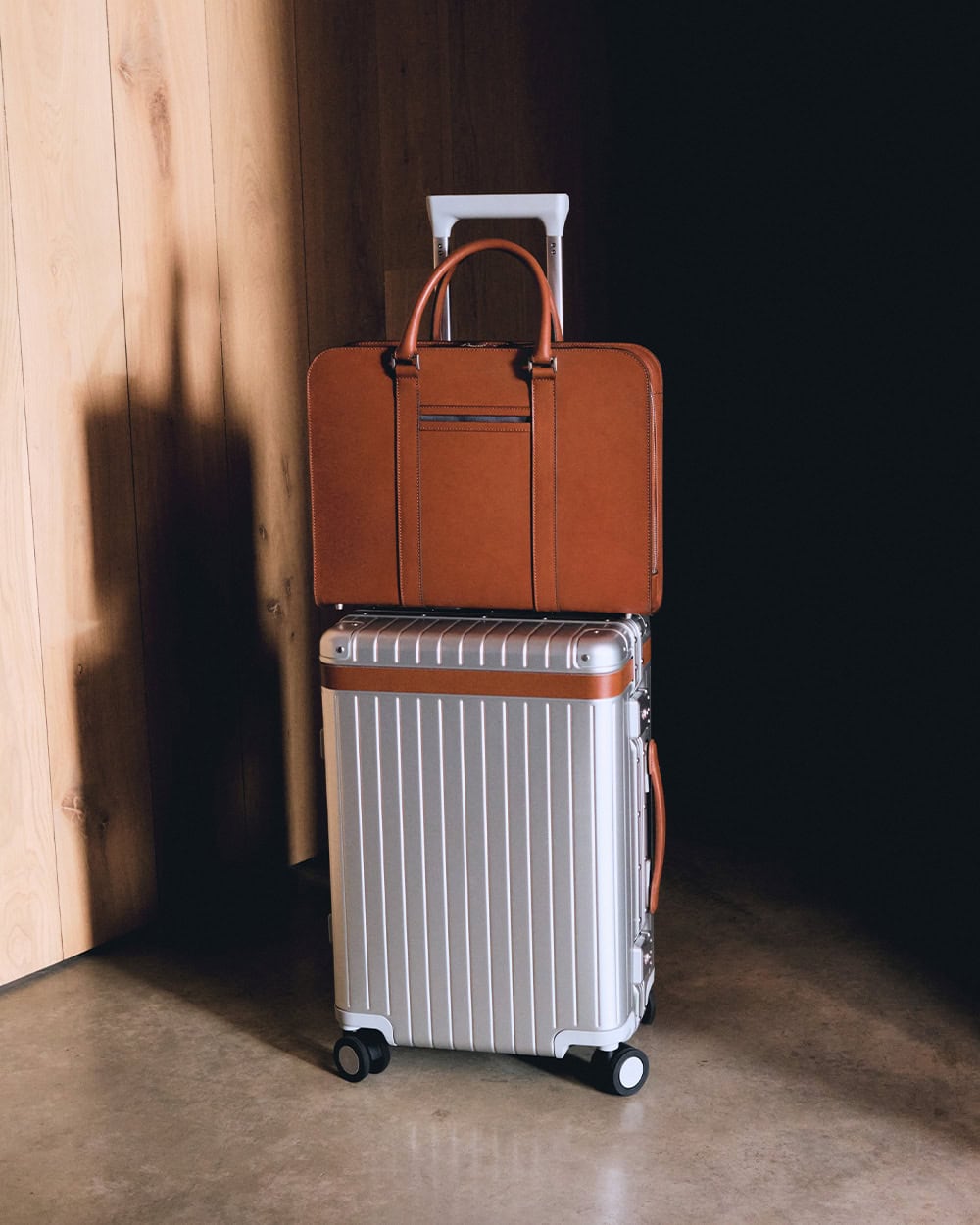
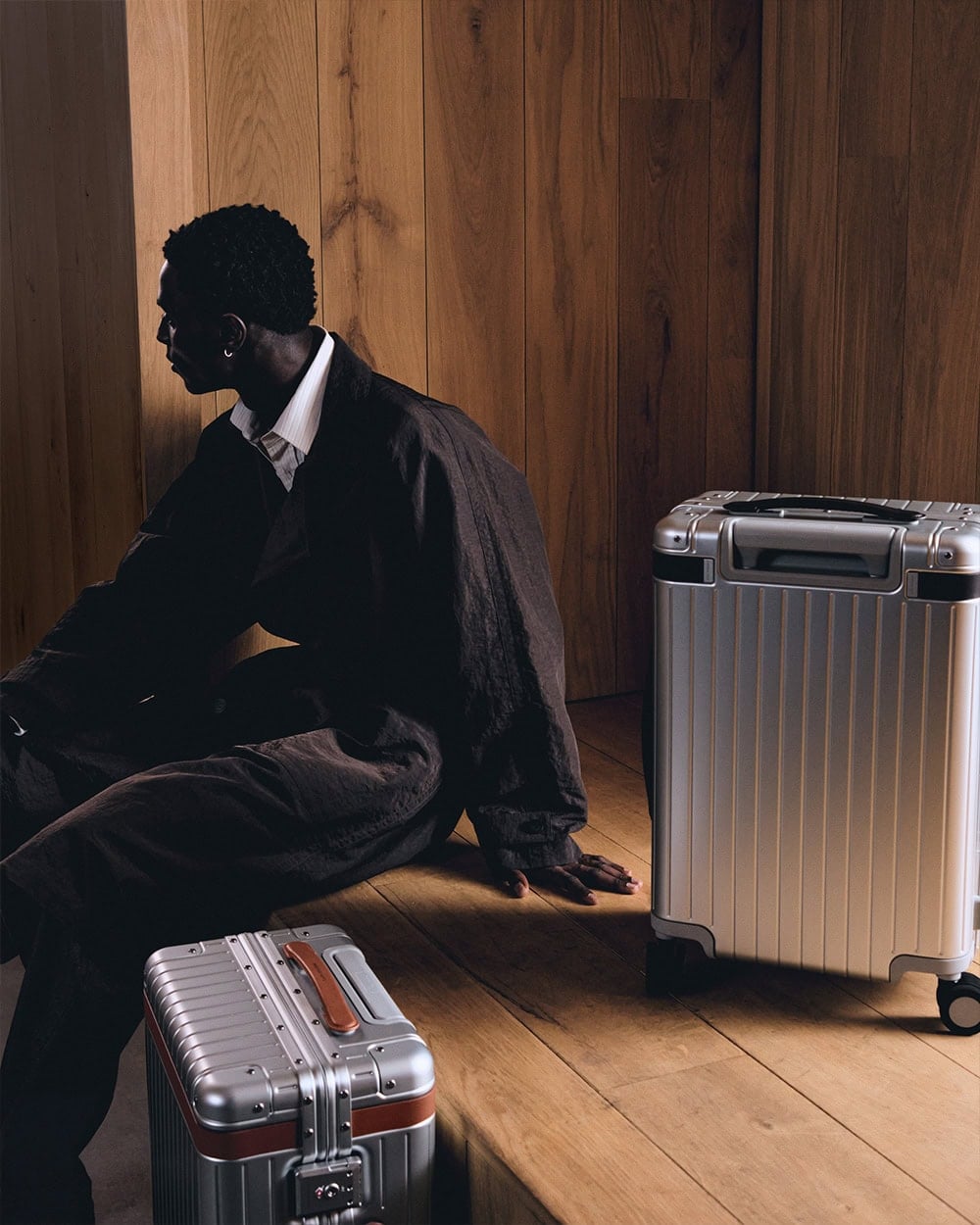
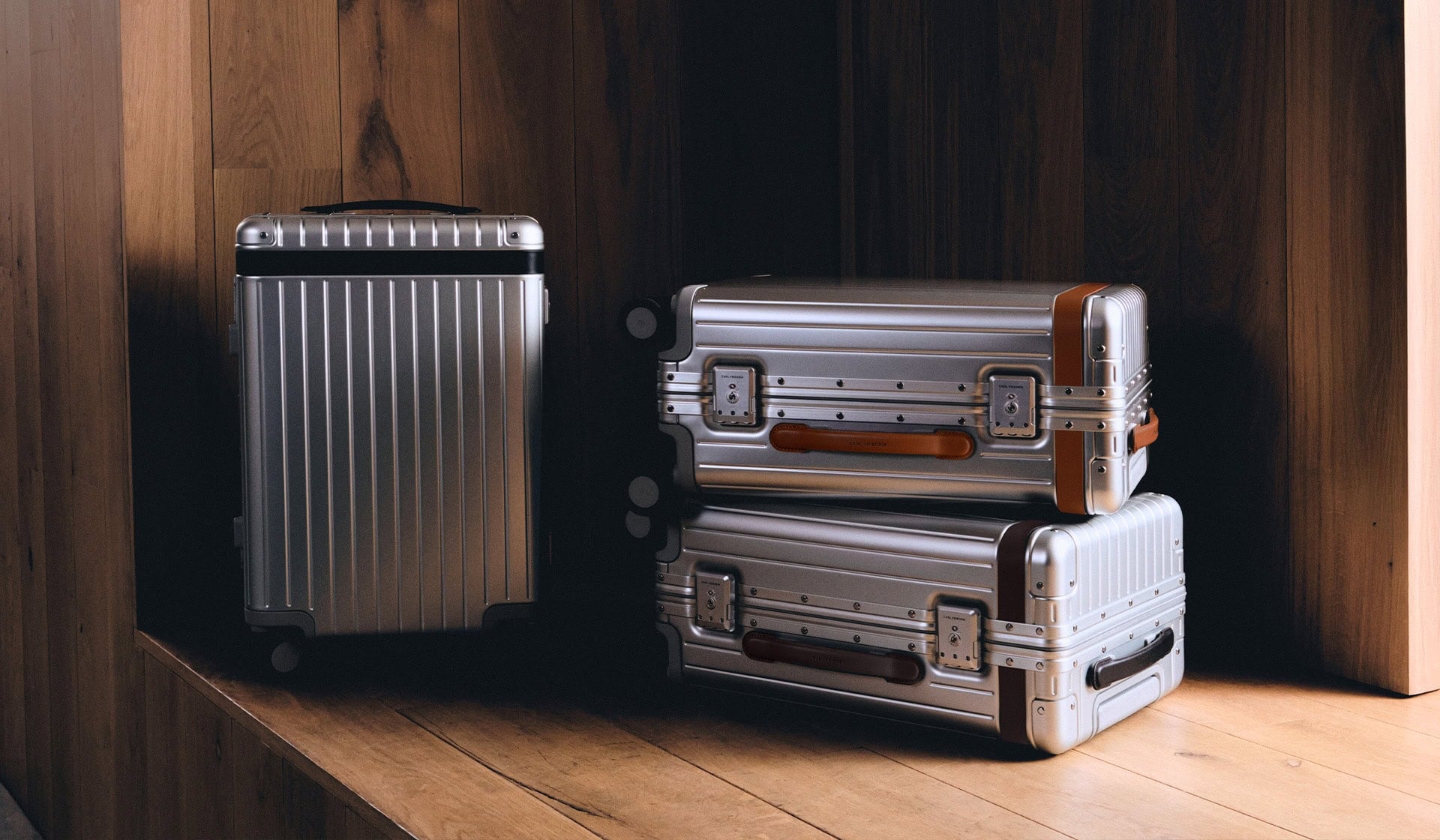
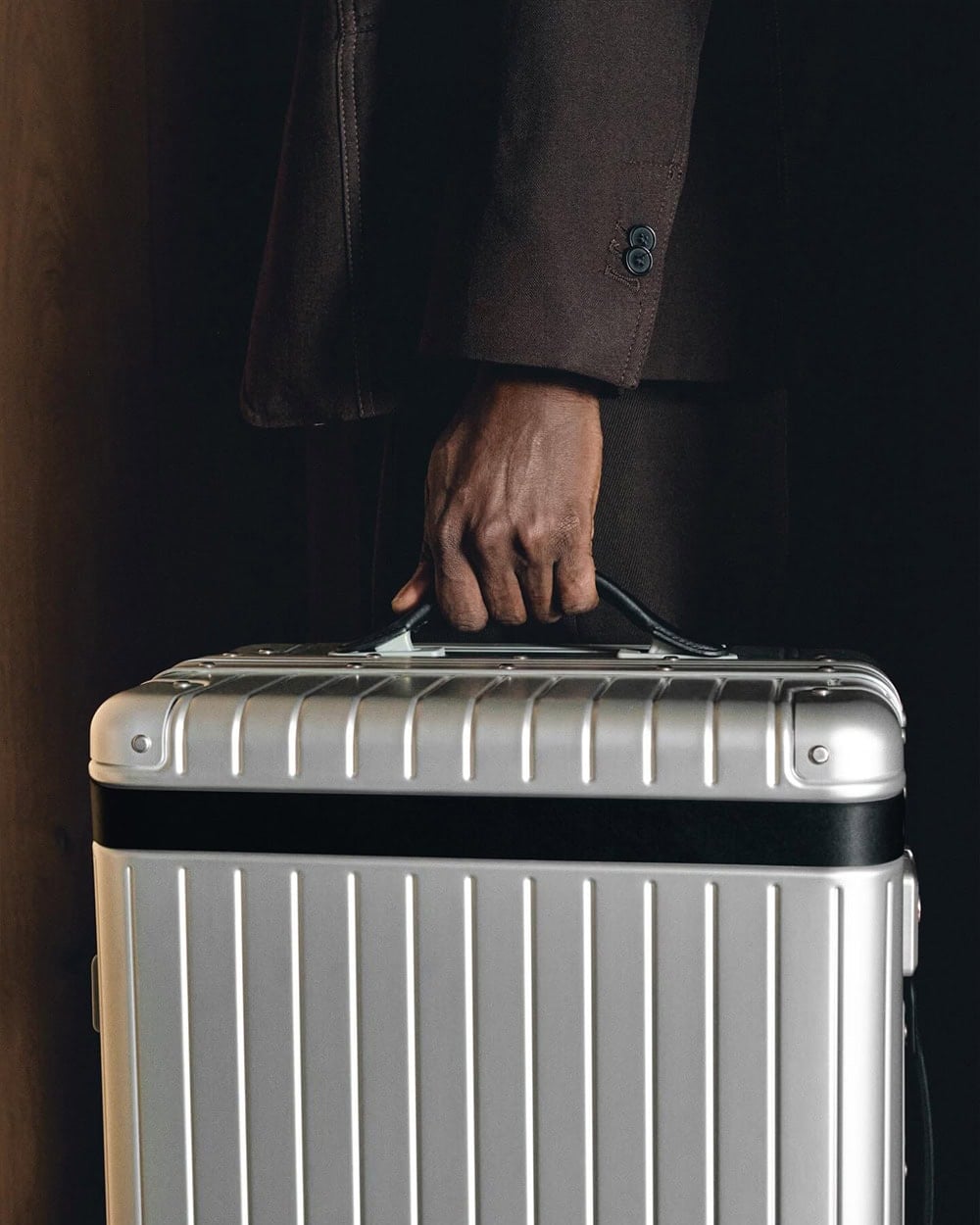
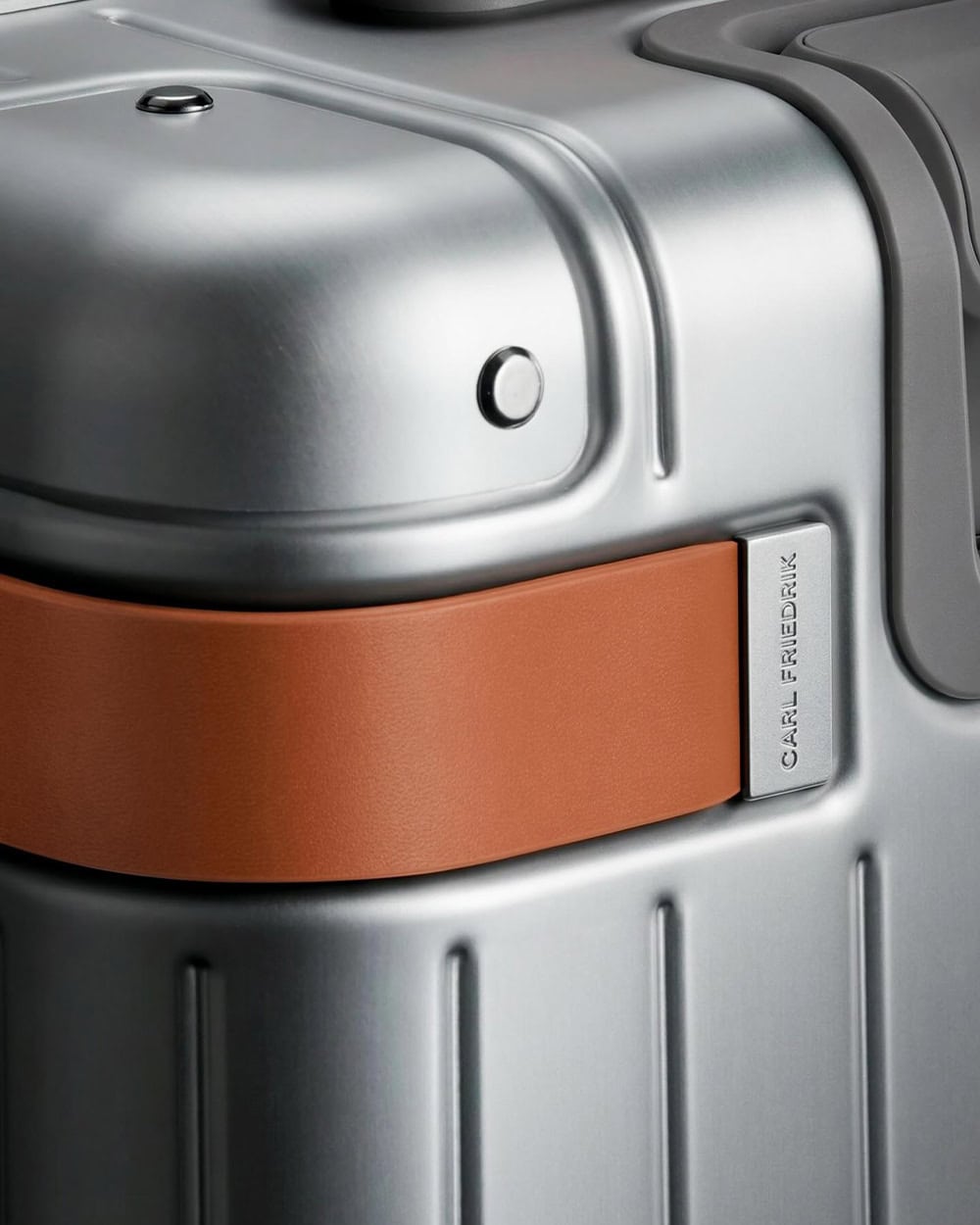
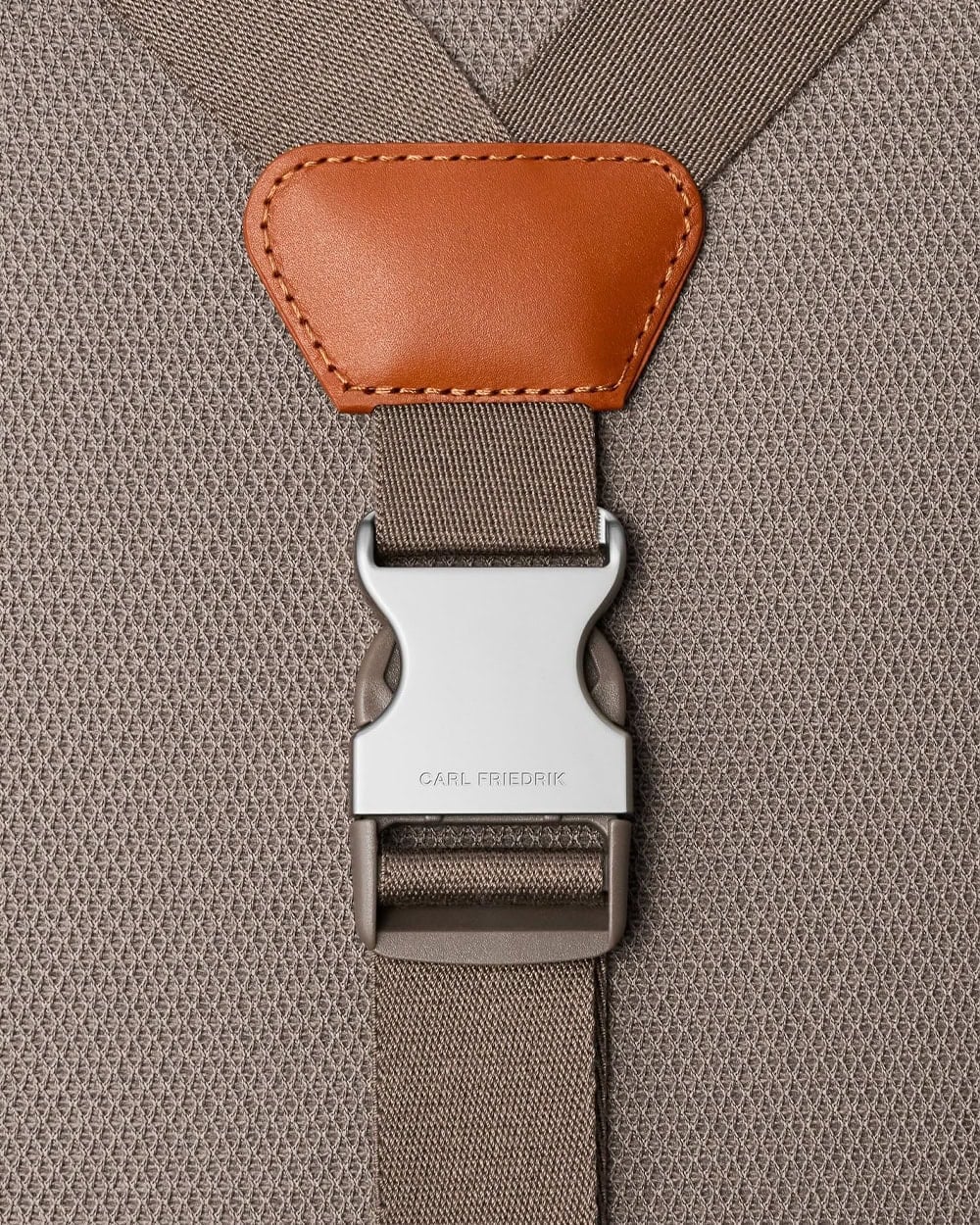
The grooved aluminium shell has a quiet, industrial confidence. Riveted construction adds to that sense of durability, while vegetable-tanned leather handles soften the look and bring in a more tactile, human element. Over time, those handles will develop their own patina, subtly shifting in tone with use.
Branding is minimal, almost to the point of being invisible. You notice the materials and the construction first, which is exactly how it should be.
Most luggage is designed to disappear into the background. This doesn’t. It has presence, without ever needing to shout.
Why This Might Be The Last Case You Buy
There’s a growing understanding that buying cheap often means buying again. If you travel regularly and rely on a carry-on, it makes more sense to invest in something that will hold up over time. Not just structurally, but visually too.
That’s where aluminium comes into its own, and where Carl Friedrik has positioned this piece. It’s built to be used, not protected. To improve with age, not deteriorate.
Crucially, it delivers where it matters. The cabin-friendly size suits modern travel, the weight feels balanced, and the multi-stage handle adjusts cleanly as you move.
At £645, it sits firmly in investment territory. But over years of use, not just a handful of trips, it starts to look less like a luxury and more like the smart choice.
Available now via Carl Friedrik
—
A paid partnership with Carl Friedrik – words and opinions are Ape’s own.